Secondary vs primary market. Where to look for a flat? Part 2
Text from 2017. Laws, rates and prices may have changed since then. Ask an agent
Continuing the article on the property market, I would like to look at the other side of the coin, this time presenting the advantages of a "used" flat.
The secondary market – advantages
The fundamental advantage is... knowledge. Before we buy a flat on the secondary market, we can ask the residents for their opinions and form a view of the area, the shops and public transport. We know the pros and cons of this solution. So what are the other advantages?
We do not have to be patient. We accept the offer and, once the formalities are completed, we can move in practically straight away. If we want a flat in the centre (read: convenience), the secondary market is probably the only option. It is hard to find a suitable plot for a new estate there. Even if one were found, the prices would effectively put us off.
If we are only at the beginning of our career and have not saved up much capital, the secondary market is the ideal solution. Previous owners usually leave most of the flat's furnishings, so we do not have to take out a large loan to furnish the kitchen, bathroom or toilet. We can replace individual pieces of furniture gradually. If we are lucky, we will also "inherit" household or audio-visual appliances. We can move in at once. All the more so since handling the formalities takes much less time.
We become property owners very quickly, which, unfortunately, is impossible on the primary market. Moreover, there is the possibility of negotiating the price (which is lower on the secondary market) and of choosing the district (attractive flats are "scattered" all over the city). We know what we are buying.
The secondary market – disadvantages
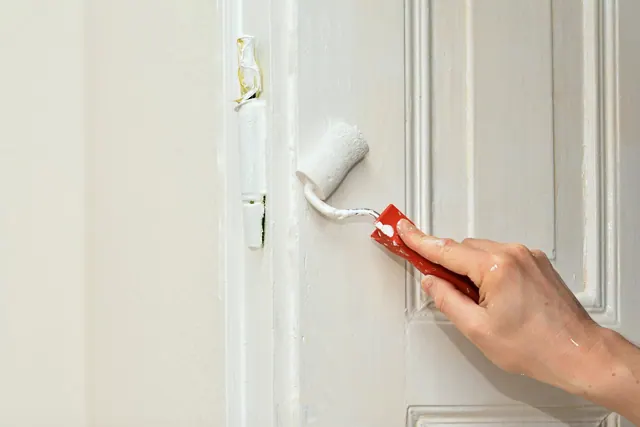
We have listed quite a few advantages of the secondary solution, but of course there are also disadvantages (far fewer of them). The first danger is the condition of the buildings. Not all of them are renovated regularly, so you should pay attention to this aspect (the listing should state the year the block or tenement building was built). The standards of flats also vary greatly. Sometimes all the wiring and plumbing, or the parquet floor, has to be replaced. In most cases renovation is essential.
Before deciding to buy a flat, you should spend quite a lot of time "x-raying" the prospective block, checking the condition of the façade, lift, roof and even pipes. A cheaper flat may later turn out to be more expensive if we start renovating one room after another.
If the flat has been lived in for many years, its layout and decor will certainly leave a lot to be desired. We must factor this into the cost estimate too. There is always a trade-off. If we like to create something from scratch, the only option left is to look into flat prices on the primary market.
Tags: secondary market