Homeowners' associations - what should we know?
Text from 2023. Laws, rates and prices may have changed since then. Ask an agent
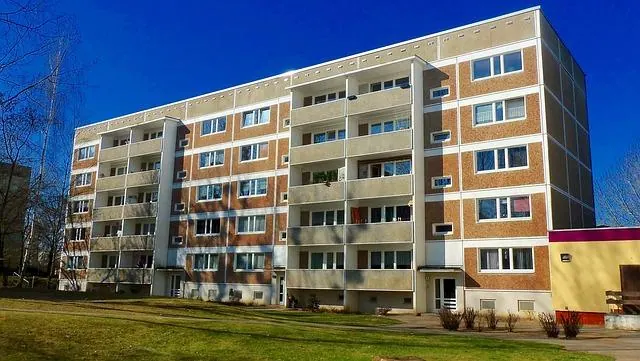
When we buy a flat in a block of flats, we become not only the happy owners of our own four walls, but also… members of a homeowners' association. It is worth making sure that cooperation with our neighbours within it goes as smoothly as possible; so let us look at the rules that guide every association, as well as the rights and obligations of each of its members.
Why do homeowners' associations exist?
Managing a property is extremely demanding - especially when we are talking about a block full of residents. That is why homeowners' associations are created, uniting all the flat owners within a building; importantly, we "join" the association automatically, at the moment we buy the unit, and we cannot renounce membership of it!
The purpose of such an association is, above all, to establish cooperation between residents on the most important matters concerning the building - among other things, keeping the common areas in good condition, dealing with utility suppliers, planning renovations and routine maintenance, and ensuring access to car parks, driveways and the lift. All of this is meant to make life easier for the block's residents.
Types of homeowners' associations
Polish law currently distinguishes two types of homeowners' associations, depending on the number of units. We speak of a small association when it comprises no more than 7 flats. It is then managed on the principles of co-ownership - which means that the consent of all members of the association is required to make key decisions.
If, on the other hand, a building contains more than 7 units, we can speak of a large association. In this case the resolutions adopted no longer have to be supported by every owner individually - a simple majority of votes is enough. Otherwise it could be difficult to make a decision that would fully satisfy everyone. From our experience as estate agents, we know that it is precisely in such associations that the art of… compromise is essential.
Our rights and obligations
Members of the association have a number of (inalienable!) rights. The most important, of course, is the right to use their own flat and the common parts of the building. These include, among other things, the staircase with the lift, utility rooms (cellars, a drying room or a bicycle store), the paths leading to the building and parking spaces. Members of the association also have the right to take, in agreement with their neighbours, key decisions concerning the use of the building, the association's finances and the election of its board. Thanks to this, every owner of a unit in the building has a real say in how the association will invest their money.
All right, but what obligations do members of the association have in return? Above all, covering the relevant costs - both those related to maintaining one's own flat and those concerning the running of the association itself; the owner of a unit should therefore contribute to the costs of maintaining the common parts, utility supply charges and insurance costs. And what about renovation work or the need to repair a fault in the plumbing or wiring? Residents are obliged to give access to their unit - to the extent necessary in the given situation.
Tags: homeowners' associations