Buying or renting an industrial hall? Check its fire protection
Text from 2019. Laws, rates and prices may have changed since then. Ask an agent
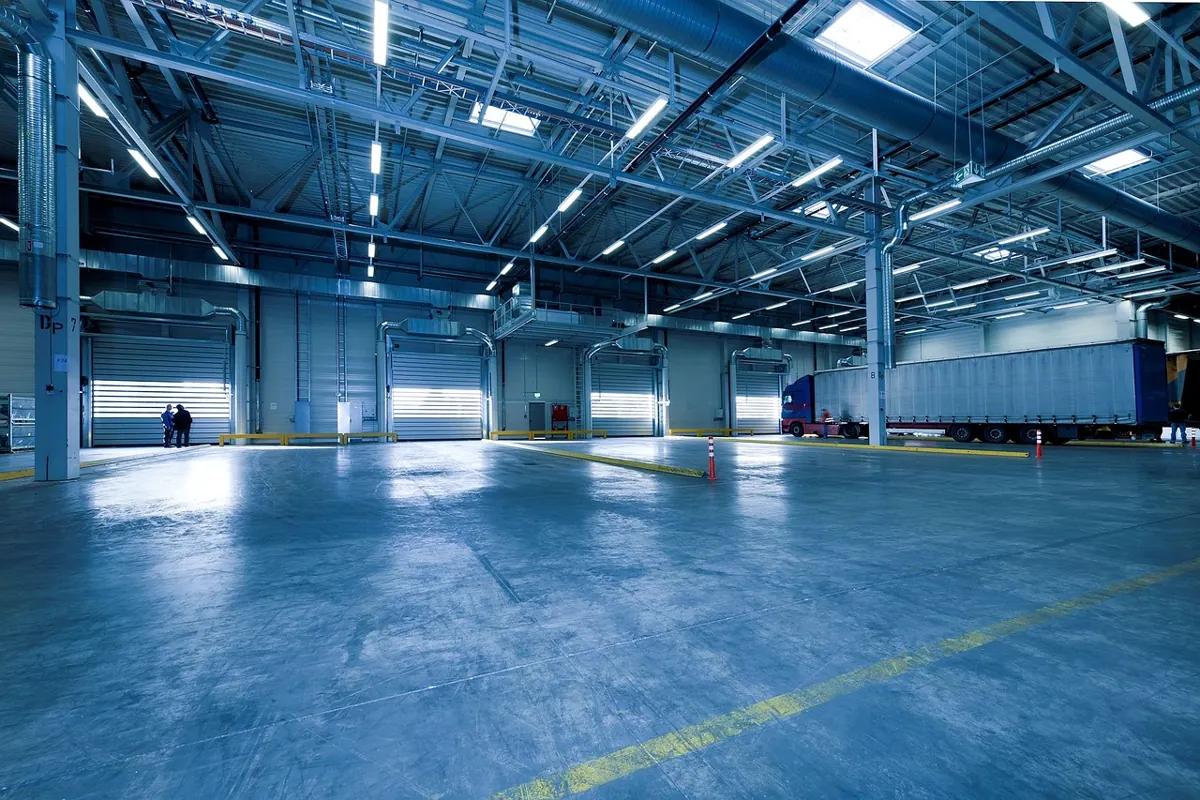
Owners and tenants of large-volume buildings, which include industrial halls and warehouses, are obliged to provide proper fire protection. If your investment plans include buying or renting a hall, be sure to check all of its safety systems.
This matters, because failing to meet the obligations in this area can have very serious consequences. Fire protection in a hall is more than an ordinary investment.
Under the building regulations in force, a hall is classified as a large-volume structure. Its nature makes it suited mainly to use as a production or storage building. In either case, proper fire protection must be provided, intended to protect not only the property itself but above all the people who work there.
Fire protection – what you need to know
Under the regulations in force, every hall is divided into two zones, each covered by separate fire regulations. The first is the main part, that is the production and storage area. The second is the part containing the administrative and office rooms and all other rooms in which the main work arising from the nature of the given building is not carried out.
The law requires the two zones to be physically separated by a fire wall, with a fire resistance appropriate to the class of the building. Before signing a purchase or lease agreement, it is worth checking whether all the formalities have been completed.
As for the fire protection of the hall itself, its type is determined on the basis of the fire resistance class of the building and its elements. There are 5 classes: A, B, C, D and E, with the first being the highest. The classes specify how long a structure performs in fire conditions, as well as criteria relating to load-bearing capacity, integrity and fire insulation. Using appropriate fire protection equipment makes it possible to lower the resistance requirements, but it is worth knowing that a working fire protection system must be part of the building's equipment throughout its entire service life.
What safety systems should a hall be equipped with?
The mandatory safety systems for a hall, thanks to which the building is automatically assigned class E, are fixed automatic water-based fire-extinguishing systems (a sprinkler system), a smoke extraction system and a system for removing the heat that builds up inside.
Additional consultations with the insurer may also prove necessary. It may turn out that the insurer demands additional safety systems for the hall, with a higher level of protection than that required by the regulations for the class to which the building belongs. Meeting these requirements is a condition for the payment of compensation in the event of an accident. Further requirements will depend on the nature of the technological processes carried out in the building.
Tags: production hall, industrial halls