What to take with you to the notary
Text from 2019. Laws, rates and prices may have changed since then. Ask an agent

For many people a visit to a notary comes with a good dose of stress and worry. Regardless of the purpose of your visit, i.e. whether you want to become the new owner of a property or transfer its ownership to another person, you must carry out the appropriate actions at a notary's office. However, for the notary to be able to carry out these actions, all the necessary documents must be made available to them. Remember that the documents shown must be originals, not photocopies.
• Documents the property buyer must provide• Documents the property seller must provide
Documents the property buyer must provide:
The person who will usually be referred to as the "buyer" in the transaction must have with them a document confirming their identity, i.e. an identity card or passport. If the buyer has been assigned a tax identification number, they should present it too. The most important requirement, however, without which no transaction will take place, is money. In this case the buyer may bring cash or choose the second option, namely submitting the full bank documentation confirming that a loan has been granted. Importantly, the amount of the loan taken out should be evident from the above documents.
The buyer does not need to bring anything else. Let us move on, however, to the more complicated matter, namely the seller and their obligations.
READ ALSO – HOW TO CORRECT INCORRECT DATA IN A LAND AND MORTGAGE REGISTER (księga wieczysta)?
Documents the property seller must provide:
The seller has a slightly harder task, because they must fully document the legal side of the property. If you follow the tips below step by step, you will certainly not forget anything. The documents required by the notary include, among others:
- a current extract from the land and mortgage register of the property (the address of the website where you can view the given extract of the register for free – https://ekw.ms.gov.pl/eukw_ogol/menu.do )
- a current extract from the Register of Entrepreneurs of the National Court Register (https://bip.ms.gov.pl/pl/rejestry-i-ewidencje/krajowy-rejestr-sadowy/elektroniczny-dostep-do-krajowego-rejestru-sadowego/)
- building plans according to the as-built survey
- a certificate confirming the building's street number (certificates of the land's intended use in the local zoning plan are obtained from the municipal office competent for the property)
- a current extract from the land register with a map extract
- a decision approving the design and granting consent to the construction of the building
- an extract from the register of units
- an extract from the geodetic map showing the building (geodetic documents, i.e. extracts from the land register, extracts from the cadastral map and extracts from the register of buildings, are issued by the relevant local government bodies).
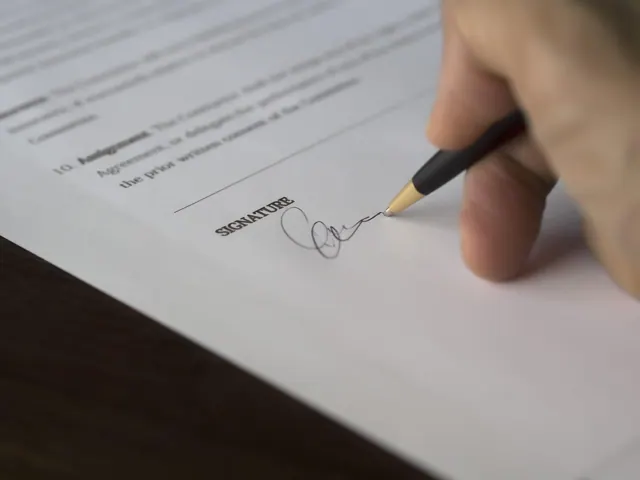
On the day the notarial deed (akt notarialny) is signed (once all the necessary parties have arrived), the notary verifies the identities of those present. Then, having obtained all the necessary information, the notary reads out the draft notarial deed. Only at this stage, in the event of any ambiguities, can questions be asked and corrections made. If none of those present raises any objections, the notary hands the deed to them to sign. Finally the notary signs it too. The parties receive notarial copies of the signed deed…
… and that's it, nothing simpler, right?
Planning to sell a house or flat? Don't know where to start? Trust the REMAX Gold team. Get in touch.